
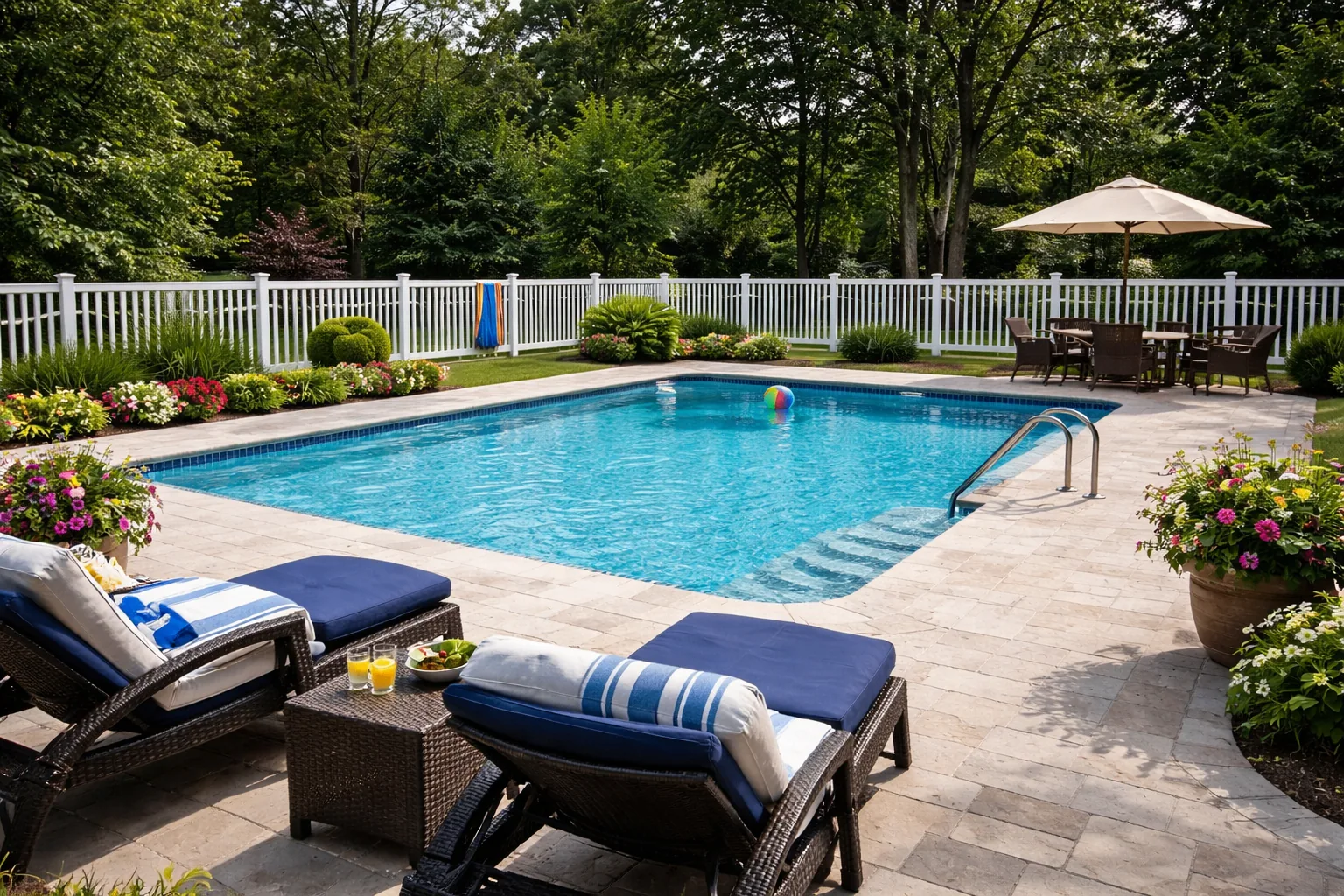
If you're installing a pool in Michigan, or you just bought a home with one, the barrier around it isn't optional. State building code and virtually every local ordinance in Metro Detroit require a fence, and getting the details wrong can hold up your certificate of occupancy or void your insurance.
Here's a plain-English overview of what Michigan actually requires and what we install every week to keep families safe.
The basic Michigan pool barrier rules
Under the Michigan Residential Code (which most local building departments enforce), any pool deeper than 24 inches needs a barrier that meets these minimums:
- At least 48 inches (4 feet) tall on the outside.
- No more than 4 inches between the bottom of the fence and the ground.
- No gaps larger than 4 inches anywhere in the fence, including between pickets.
- No horizontal rails on the outside within 45 inches of the ground that a child could use as a foothold.
- Self-closing, self-latching gates that open away from the pool, with the latch at least 54 inches off the ground.
What this rules out
The requirements above mean a few common fence styles won't pass inspection around a pool:
- Split rail or ranch-style fences (too many gaps).
- Standard 3-foot decorative fences (too short).
- Chain link without a proper self-latching, spring-loaded gate.
Materials that work well for Michigan pools
Aluminum
Our most common recommendation. Powder-coated aluminum won't rust from chlorine or pool splash, meets code with vertical pickets spaced 3 7/8 inches apart, and looks great around any style of home.
Vinyl privacy or semi-privacy
Great if you also want to block sight lines from neighbors. Requires solid panels or narrow-gap picket styles to meet the 4-inch rule.
Mesh removable pool fencing
An option for families who want to take the fence down at the end of the season, though most Michigan municipalities still require a permanent perimeter barrier around the property.
Gate hardware is where most homeowners get failed
Every year we get called out to help homeowners pass a re-inspection because their gate hardware didn't meet spec. Make sure your installer uses:
- A true self-closing hinge (not just a spring).
- A magnetic self-latching mechanism rated for outdoor pool use.
- Hardware that opens outward, away from the pool.
Alarms, covers, and other layered protection
The fence is your primary barrier, but the CDC and the Michigan Department of Licensing and Regulatory Affairs recommend layered protection: door alarms on any house doors facing the pool, safety covers, and pool alarms. These aren't code-required in most Michigan cities, but they save lives.
Check your specific city
Local ordinances can be stricter than the state minimum. Cities like Livonia, Canton, and Plymouth have their own supplemental rules on gate placement and setbacks. Your installer should pull the permit and know the local requirements cold; if they don't, that's a red flag.
We've installed hundreds of code-compliant pool fences across Wayne, Washtenaw, and Oakland counties since 2010. If you're planning a pool project, we're happy to walk your yard, review the local code with you, and provide a free written estimate that includes the permit.