If you're a Michigan homeowner shopping for a new privacy fence, chances are you're weighing vinyl against wood. Both are excellent materials, but they age very differently in our climate. Here's an honest side-by-side based on what we actually see in yards from Monroe to Farmington Hills.
How Michigan weather punishes fences
Fences here have to survive four seasons of abuse: sub-zero January cold, spring saturation, summer humidity spiking into the 80s, and fall temperature swings of 40 degrees in a single day. That constant expansion and contraction is what actually determines how long a fence lasts, not sun or wind.
Wood fencing in Michigan
Expected lifespan
A well-installed cedar fence, properly sealed, typically lasts 15–20 years in Michigan. Pressure-treated pine runs closer to 12–15 years. Both numbers drop significantly if the fence never gets re-sealed.
Maintenance reality
Wood needs to be cleaned and re-stained or re-sealed every 2–3 years. Skip a cycle and you'll see cupping, splitting, and gray weathering set in fast, especially on the south-facing side.
When wood is the right call
Historic neighborhoods, wooded lots, and homeowners who genuinely enjoy the look and smell of natural cedar. There's nothing else quite like it.
Vinyl fencing in Michigan
Expected lifespan
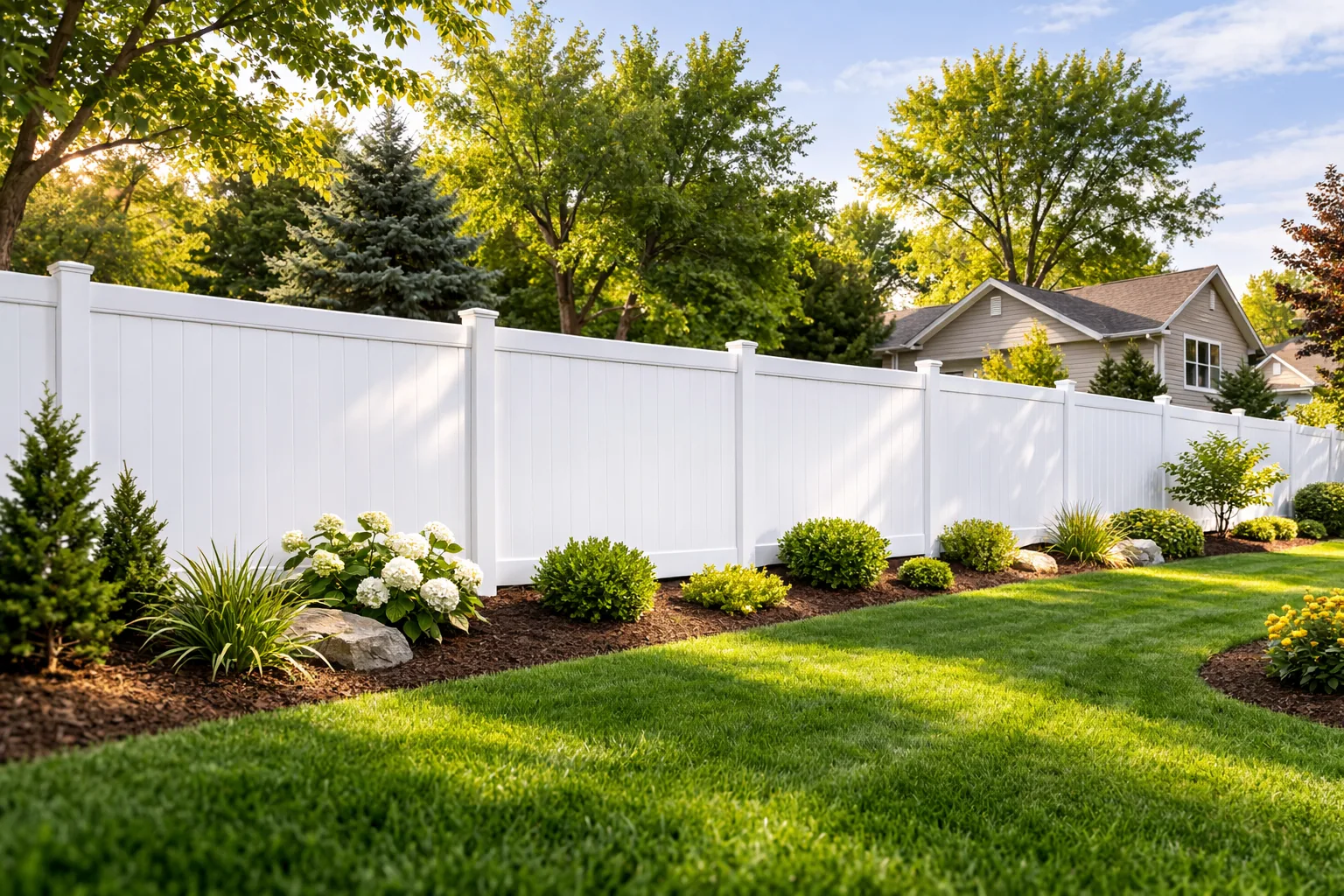
Quality virgin vinyl (not recycled) routinely lasts 30+ years in our climate. Most reputable manufacturers back it with a lifetime limited warranty.
Maintenance reality
Occasional rinse with a garden hose. That's it. No staining, no sealing, no rotted pickets.
Cold-weather performance
Modern vinyl is engineered with impact modifiers specifically for climates like Michigan's. It stays flexible enough to handle a snowplow bump or a stray branch without shattering.
Total cost of ownership over 20 years
Vinyl costs more up front. But once you add in the price of stain, brushes, sprayers, replacement pickets, and either your weekends or a contractor to do it, wood almost always ends up more expensive by year 15. We've done this math with countless homeowners in Canton and Plymouth, and vinyl wins on lifetime cost the vast majority of the time.
The environmental angle
Cedar is renewable. Vinyl is not, but it also lasts twice as long and doesn't require chemical sealants every few years. Both cases can be made honestly.
Which should you choose?
- Want to install it once and forget it? Vinyl.
- Love natural materials and don't mind maintenance? Cedar.
- Need something affordable that you'll replace in 12–15 years? Treated pine.
We install both every week and we'll never push one over the other. If you'd like to see samples of each in your yard and get a written estimate for both options, we're happy to come out, with no obligation.